
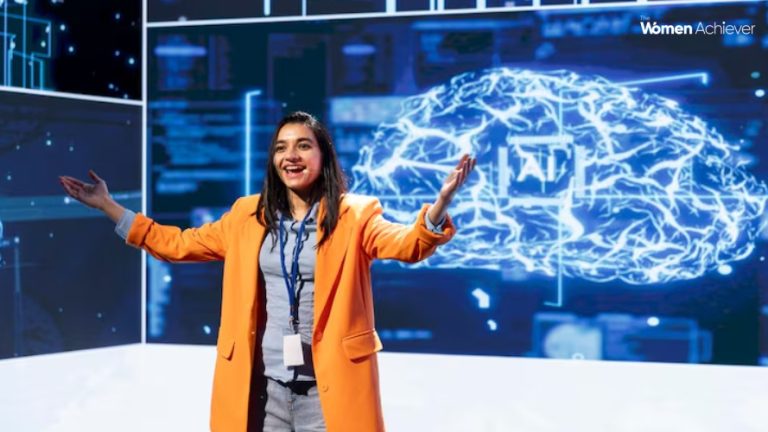
Here’s about Women in AI and Tech Leadership: Breaking the Silicon Ceiling
Technology leadership positions have remained under male control since the industry began. Women in AI and tech leadership positions today work to eliminate this gap while dismantling what people refer to as the “Silicon Ceiling.
People need to understand that this process involves more than just increasing the number of representatives. The process will create a new system to drive innovation forward.
The Silicon Ceiling: What It Means
The “Silicon Ceiling” refers to the invisible barriers that limit women’s rise in technology and AI leadership roles. Women who study STEM fields face challenges because they have not yet reached equal representation in top engineering positions or executive roles or board positions within major tech companies.
The lack of diverse representation in AI systems creates technologies that produce unfair outcomes through its algorithms which determine employment decisions and credit assessments.
Leading the AI Revolution
Women now create their professional spaces because they no longer wait for someone to invite them to social gatherings.
Fei-Fei Li co-director of the Stanford Human-Centered AI Institute dedicated herself to creating ethical AI solutions. Data diversity along with team diversity plus decision-making process diversity brings essential power to achieve superior research study results.
IBM executives, including Arvind Krishna, have discussed their plans for inclusive AI development. Women who lead product development and research efforts and operational activities in the company serve as the primary force for responsible AI advancement.
Women entrepreneurs establish startups that create AI-driven solutions for fintech and healthtech and edtech and climate tech. The practice establishes inclusive innovation because diversity serves as the central value that drives their business operations.
The Importance of AI Leadership Representation
AI systems learn from data. Algorithms develop their blind spots when leadership teams lack sufficient diversity. The system creates bias through its facial recognition software which identifies people incorrectly while its lending platforms and hiring systems produce discriminatory outcomes.
Women who lead AI organizations use their unique backgrounds to challenge established beliefs while they evaluate ethical dangers and create unbiased solutions.
Representation operates as a strategic asset that goes beyond its function as a symbolic element.
Challenges Women Still Face
The existing problems remain despite the advances that have been made:
- Startups face challenges because they cannot secure venture capital funding.
- Mentorship opportunities in the deep tech sector remain inadequate.
- Performance reviews and promotions get affected by gender stereotyping.
- People should not work excessive hours according to business work cultures because companies should support sustainable leadership methods.
Women face systemic barriers which prevent them from becoming leaders in technology companies despite their increasing presence in the workforce.
The Rise of Women-Led AI Startups
Women founders are creating AI companies from their bases around the globe. Their companies prefer transparent operations which generate positive social effects along with financial growth.
Women-centered investment networks and accelerator programs offer business founders resources which help their companies grow quickly through effective growth methods.
Building the Next Generation of Leaders
The Silicon Ceiling can only be broken through transformation which must occur at three distinct levels.
Students should receive encouragement to start their STEM studies during their early education. Organizations should establish mentorship programs that include both mentoring and sponsorship. Organizations must create procedures for handling employee promotions which must apply to both handling and selection processes. The organization needs to establish equal pay standards while providing leadership opportunities for all employees.
Conclusion: Investors and corporate boards must understand that diverse leadership teams create better financial results and drive greater innovation progress.
Throughout the next century, artificial intelligence will produce significant advances in finance and healthcare and governance systems and educational institutions. Women who lead this transformational process represent the missing link in the future development process.




Add comment