
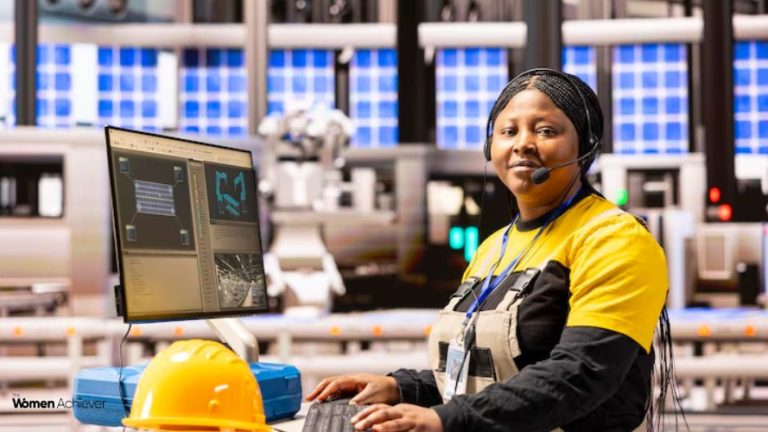
Here’s how Africa’s hidden economy functions and identifies women as the strongest industrial force in the region.
People commonly associate Africa’s economic power with its natural resources and extensive farmland and international business operations. The women who operate Africa’s undocumented economic activities form a substantial economic force. These women operate as traders and manufacturers and farmers and innovators and entrepreneurs who establish one of the continent’s most significant economic foundations.
The Backbone of the Informal Economy
African countries have an informal economy which accounts for much economic activity and women hold leadership positions in this sector. Women conduct trade activities through open-air markets which operate in major urban centers and through cross-border trade networks. Women operate small businesses which handle supply chain operations while they deliver goods and services to local neighborhoods.
The “hidden economy” generates economic effects which extend beyond what GDP measurements can prove. The system creates job opportunities and drives local economic growth and provides essential support to families.
From Micro to Macro: Women as Industrial Drivers
Women start their careers in micro-enterprises but their impact extends to larger commercial sectors. Women-led cooperatives in agriculture and textiles and food production work to change local business operations into international trade channels. The collectives establish business relationships through shared resources and knowledge exchange which creates product value chains that match institutional industrial standards.
Women entrepreneurs from Rwanda and Ghana have established their presence in the manufacturing sector through agricultural product processing and consumer product manufacturing and light industrial activities. The community-based approach of their organization applies inclusive methods while showing great flexibility in all its activities.
Financial Exclusion—and Innovation Despite It
African women encounter multiple obstacles which stem from their restricted access to formal financial products. Women face barriers to traditional banking services which developed from their lack of collateral and credit history and formal employment records.
The innovation process emerged as a response to this problem. Women established alternative financial solutions through the creation of rotating savings groups and microfinance networks and digital payment systems. Women acquired greater financial control through mobile money platforms which enabled them to conduct transactions and save money and invest without needing traditional banking services.
Resilience in the Face of Structural Challenges
The African female workforce operates in a complex system which includes social norms and policy deficiencies and infrastructural shortfalls. The women show incredible strength to overcome the multiple obstacles which they experience. Women develop their businesses through various methods which include supply chain management and agricultural climate change readiness.
The African hidden economy exists because people create new ideas under dangerous conditions.
The Multiplier Effect: Investing in Women Pays Off
Research shows that women spend most of their earnings to support their families and their communities. The process generates multiplier effects which enhance educational and healthcare and economic stability throughout the entire region.
Economic empowerment for women establishes gender equality while serving as a vital public policy for Africa’s economic progress. Female entrepreneurs achieve economic growth through government support which provides them with funding and educational programs and market access.
The Future: From Invisible to Indispensable
African countries experience urban growth and digital technology adoption which causes their informal economy and formal economy systems to become interconnected. Women use technology to grow their businesses after becoming recognized business leaders from their previous roles as informal traders.
The governments and NGOs and private sector organizations start to understand the economic contributions which women provide. Women gain access to formal industries through financial inclusion policies and educational programs and entrepreneurship initiatives which create pathways from their current status to full societal participation.
Conclusion: The hidden economy of Africa functions as a survival strategy which operates as a complex system that depends on women for its primary power. Women control industrial operations through their business activities which lead to job creation and economic development throughout the continent.




Add comment