
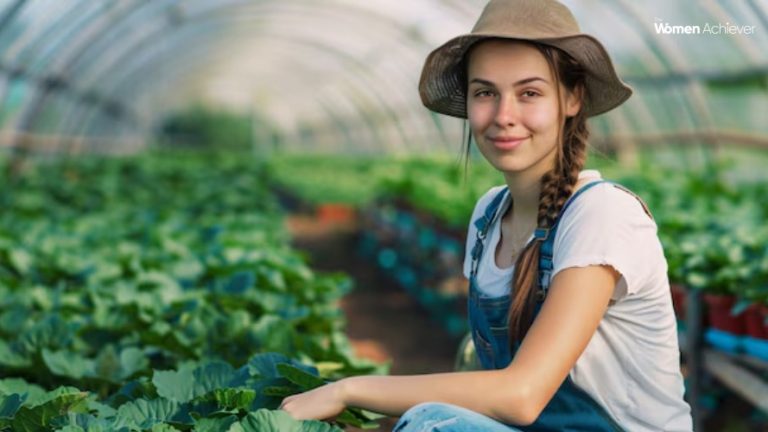
Here’s about Is Women’s Leadership the Key to Sustainable Agriculture
Women face barriers to land ownership rights and financial resource access and educational opportunity availability and agricultural technology access despite their essential contributions to agriculture. Women who take on leadership positions in agricultural organizations start to transform the agricultural system because they introduce new farming methods which drive system progress.
The sustainable agricultural framework benefits from women leaders who manage natural resources through their long-term dedication to resource management. Women farmers work toward three objectives which include maintaining soil health and water conservation and biodiversity protection and crop diversification because these objectives help achieve both food security and family health benefits. The women-led agricultural enterprises use organic farming methods along with regenerative agriculture and climate-smart agricultural practices to achieve year-round crop production while preserving their environmental assets.
Community leaders establish agricultural solutions which address local farming problems through their leadership abilities. Female farmer cooperatives and self-help groups have emerged as powerful platforms for sharing knowledge, accessing markets, and improving livelihoods. The groups create seed banks together with natural fertilizer production facilities and irrigation systems which enable users to reduce their chemical inputs while developing methods to cope with climate change.
Women leaders of organizations help organizations succeed through their ability to guide technological changes. The agricultural business sector employs women entrepreneurs who establish eco-friendly food businesses which operate sustainable food systems and farm-to-table supply chains and environmentally safe agricultural technologies. The agricultural business sector receives operational support through various organic produce startups and agri-tech platforms, which help farmers access markets and weather data for improved food production and distribution.
Women who participate in local decision-making through village councils and national agricultural boards work on policies which address the needs of small farmers and rural families and marginalized groups. Their perspectives show how inclusive development together with environmental protection and fair distribution of resources should be essential for sound decision-making.
The agricultural sector requires better structural systems to reach its full potential because female leaders face existing obstacles. Governments and institutions must improve women’s access to land rights, financial services, education, and agricultural training. Better results will emerge from the funding of rural infrastructure projects and digital technology development and women-centered agricultural initiatives.
Conclusion: Sustainable agriculture includes systems which maintain environmental balance and human economic activities. Women leaders unify environmental conservation efforts with sustainable community development and economic prosperity. Women leaders create enduring empowerment routes through their leadership activities which occur at each stage of the agricultural value chain.




Add comment